South Gloucestershire’s Quaker Burial Grounds is listed at Grade II
The Quaker Burial Ground at Lower Hazel, South Gloucestershire has been granted Grade II listed status by the Department for Culture, Media and Sport (DCMS) on the advice of Historic England.
Dating from 1656, the burial ground is one of the earliest Quaker burial sites in the country. It has been in continuous use for more than 365 years.
It was established to provide a place of burial for the large Quaker community in the area at a time when Anglican churches often refused nonconformists within the consecrated ground of the Church of England.
The listing recognises the site’s historical significance and architectural features that reflect early Quaker principles of simplicity.
Comments:
Ross Simmonds, South West Regional Director at Historic England, said: “This listing recognises and celebrates an important piece of the story of religious diversity in Britain. The burial ground at Lower Hazel helps us understand the experiences of nonconformist communities during times of persecution in the 17th century, and remains important to the community today.”
Roger Sturge, a Bristol Quaker, said: “I’m one of the hundreds of Quakers in Bristol today. We look to the future, building a better world, but our past also matters.
“In 1669 my 7th great-grandfather, Joseph Sturge, was buried in this beautiful Quaker burial ground. A local farmer, he was among the first converts to this new radical religion. So my family have been buried here through almost its entire history. When my own time comes, I plan to join Joseph and his descendants here.
“It is a wonderful tranquil place, where so many have worshiped over the centuries and still worship today. I hope the listing means more people will experience its calm and be inspired to find out more about Quakers.”
History
The Olveston area was an important place in the early years of Quakerism. The new religion took root quickly after preachers John Audland and John Camm – instrumental in spreading Quakerism in the west of England – addressed a large group of farmers on Elberton Green in 1654. Forty of the 100 families in the parish became converts. In the 1660s, George Fox, founder of the Religious Society of Friends, visited Olveston to help establish monthly meetings, and spent his honeymoon in the village in 1669.
Architectural features
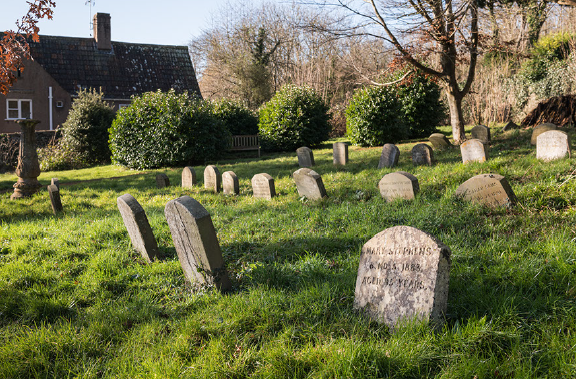
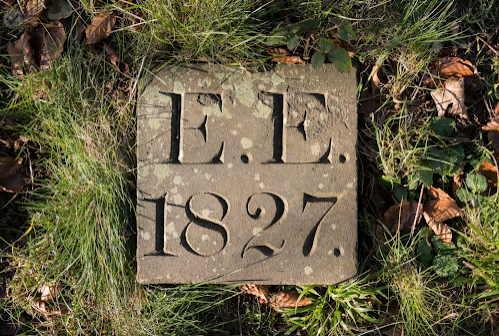
The architectural modesty of the Lower Hazel burial ground and the humble grave markers, several inscribed with only the initials of the deceased, reflect Quaker preferences for plainness and simplicity.
The stone boundary walls surrounding the site feature simple yet distinctive elements, including a moulded oak door case and doors, and ‘cock-and-hen’ capping – alternating upright stones placed on top of the stone walls.
In line with Quaker principles, early burial grounds tended to be simple, functional enclosures with minimal landscaping and planting, and plain funerary monuments reflecting humility in death.
Burial grounds – graveyards without a principal place of worship – emerged in the 17th century as separate places for the burial of the dead from minority faiths, who were often denied burial within the consecrated ground of the Church of England.
The land was provided through a bequest from John Smith of Lower Hazel, with the first documented burials taking place in 1657.
The Quaker Burial Ground at Lower Hazel is one of several historic sites associated with Quakerism in South Gloucestershire to be granted listed status.

Listing
Listed buildings are buildings of special architectural or historic interest. The record of each listed building is hosted on the National Heritage List for England (also known as ‘the List’, or NHLE).
The NHLE is a publicly available, searchable database of entries containing information on England’s designated heritage. There are over 370,000 entries for listed buildings on the NHLE.
Grade II buildings are of special interest. Over 90% of all listed buildings are in this class.
Read more of our news from Bristol and beyond at Bristol News https://directlocalbristol.co.uk/bristol-news/